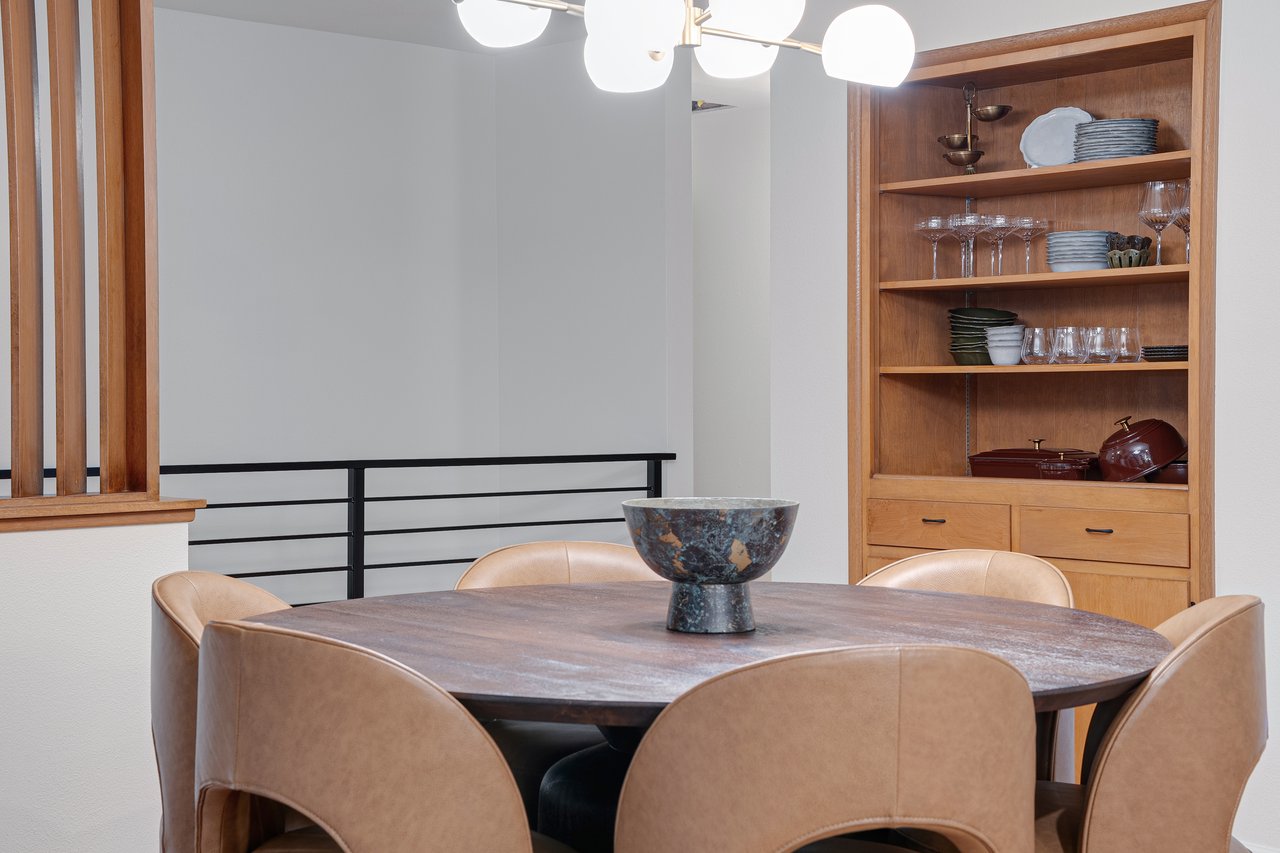
Creating a home that feels elevated and expensive doesn’t have to mean knocking down walls, replacing your kitchen, or committing to a major renovation. In fact, some of the biggest changes come from the smallest details.
The secret is less about how much you spend and more about creating a home that feels intentional, cohesive, and thoughtfully finished. Whether you’re getting your home ready to sell or simply want to love your space a little more, these updates can make a surprisingly big difference.
1. Upgrade Your Lighting
Lighting is one of the easiest ways to make a home instantly feel more custom.
Builder-grade fixtures can date a space, while a beautiful chandelier, pendant, sconce, or flush-mount fixture can completely change the look of a room. Pay special attention to the fixtures over your dining table, kitchen island, entryway, and bathroom vanities.
And don’t forget the bulbs. Warm, consistent lighting throughout your home creates a much more inviting atmosphere than a mix of cool and warm bulbs.
Designer tip: Install dimmers in your main living spaces. Being able to soften the lighting in the evening instantly makes a room feel more elevated.
2. Replace Builder-Grade Hardware
Think of hardware as the jewelry of your home.
Swapping dated cabinet knobs, drawer pulls, door handles, and bathroom hardware is a relatively inexpensive project that can make kitchens and bathrooms feel significantly more current.
You don’t necessarily need every metal finish in your home to match, either. Mixing finishes can look beautiful when it feels intentional. The key is choosing finishes that complement one another and repeating them throughout the space.
3. Hang Curtains Higher and Wider
This is one of the oldest design tricks for a reason.
Instead of hanging your curtain rod directly above the window frame, bring it closer to the ceiling and extend it beyond the sides of the window. It draws the eye upward, makes ceilings appear taller, and allows more natural light into the room when the curtains are open.
Choose panels that reach the floor rather than stopping short. Linen, linen-look, or heavier textured fabrics can give you a high-end appearance without the custom price tag.
4. Go Bigger With Your Rugs
A rug that’s too small can unintentionally make an entire room feel smaller.
In a living room, your rug should ideally be large enough for at least the front legs of your furniture to sit on it. In a dining room, it should extend far enough beyond the table that the chairs remain on the rug when they’re pulled out.
Larger rugs help visually anchor a room and make everything feel more substantial and intentional.
5. Simplify Your Decor
An expensive-looking home usually isn’t filled with more things. It’s filled with the right things.
Instead of covering every shelf, counter, and tabletop, give your decor some breathing room. Try grouping a few larger objects together rather than displaying lots of small accessories.
A stack of books, a beautiful vase, a sculptural object, or a large branch arrangement often has more impact than a collection of smaller pieces.
When in doubt, edit.
6. Add Architectural Interest
You don’t need a full remodel to give a basic room more character.
Simple additions like picture-frame molding, board and batten, shiplap, ceiling treatments, or an accent wall can make a builder-grade space feel much more custom.
Even something as simple as painting interior doors or adding substantial trim around a doorway can change the personality of a room.
7. Choose a Cohesive Color Palette
One of the quickest ways to make a home feel polished is to create visual consistency from room to room.
That doesn’t mean every room needs to be the same color. Instead, choose a palette of complementary tones and repeat them throughout the house.
Warm whites, creams, natural woods, soft greens, muted earth tones, and black or brass accents are all easy ways to create a timeless, layered look.
A cohesive palette also helps your home feel larger because the rooms naturally flow into one another.
8. Incorporate Natural Materials
Natural materials add warmth and texture that can be difficult to replicate with inexpensive synthetic finishes.
Look for ways to incorporate wood, stone, linen, cotton, leather, woven baskets, ceramic pieces, and greenery.
You don’t need a room full of them. Even a wood coffee table, linen curtains, ceramic vase, and a few natural branches can add depth and make a space feel more collected.
9. Upgrade Your Mirrors
Bathroom mirrors are an especially overlooked opportunity.
Replacing a basic frameless builder mirror with a framed mirror can instantly make a bathroom feel more finished. The same goes for entryways, bedrooms, and living spaces.
A large mirror can also reflect natural light and visually expand a smaller room.
10. Pay Attention to Scale
One of the biggest differences between a room that feels professionally designed and one that feels slightly “off” is scale.
A tiny piece of artwork floating on a large wall rarely has the same impact as one oversized piece or a thoughtfully arranged grouping. The same principle applies to lamps, coffee tables, rugs, and decor.
When you have a large space to fill, don’t be afraid to go bigger.
11. Declutter the Everyday Stuff
Sometimes the best home upgrade costs absolutely nothing.
Clear unnecessary items from kitchen counters, bathroom vanities, entry tables, and open shelving. Hide cords when possible. Give everyday necessities a designated place.
This doesn’t mean your home needs to look like nobody lives there. It simply means reducing the visual noise so the things you want people to notice can stand out.
12. Make the Finishing Touches Feel Intentional
The final layer is what brings everything together.
Fresh flowers or greenery. A beautiful hand soap by the kitchen sink. Coordinated towels in the bathroom. A styled coffee table. Crisp bedding. Art hung at the right height. Matching lightbulb temperatures throughout the house.
None of these changes are particularly dramatic on their own, but together they create the feeling of a home that has been thoughtfully designed.
You Don’t Have to Renovate Everything
A beautiful home isn’t necessarily the one with the biggest renovation budget.
Often, it’s the home where someone paid attention to the details.
Before assuming you need to replace cabinets, redo floors, or start tearing down walls, take a look at your lighting, hardware, window treatments, furniture placement, color palette, and styling. A handful of thoughtful changes can completely transform how your home looks and feels — without the price tag or headache of a major renovation.
And if you’re thinking about selling, these smaller updates can be especially worthwhile. Knowing where to spend, where to save, and what buyers will actually notice can help you make smart improvements before your home hits the market.